Monday, 24 August 2015

A trip to Titchwell

The sun blazed in a wide open sky, the blue stretching above the open landscape of marshes, pools and reeds of Titchwell on the north Norfolk coast. A stiff breeze ruffled the sea creating white caps and powering the wind turbines just offshore in endless cycles. The long stretch of sandy beach, exposed by the low tide had rivulets of water running through the little sand waves created by the receding water. The shells of razorfish littered the strand line, crunching under foot. Working back inland the marshes stretch as far as the eye can see beyond the sandy dunes. To the left of a gravel path large lagoons with shimmering wavelets host a multitude of birds. From the beach the lagoons become more freshwater, so that the first, nearest the beach, is almost empty in the low tide with just the odd pools of water and tufty, hardy plants. The third pool is totally freshwater and full of water, so that at this point most of the birds are concentrated here. Beyond it are large beds of reeds.

The freshwater lagoon

Owned by the RSPB the reserve has some fabulous, well maintained hides that present perfect opportunities to watch the goings on in the pools without disturbing the birds. The newer Parrinder Hide is a modern building with wide, open windows overlooking both the freshwater and brackish lagoons. For me I prefer the more traditional wooden hide, although this is still very open and light compared to many I have been in. Still, I love the smell of wood, the slight mustiness, the scratch of wooden benches on wooden floor, lifting the catches and hoisting open the windows to reveal the landscape beyond.

The freshwater lagoon has a maze of little islands and peninsulas of land covered in grass, its edges has thick lush green grasses and tall dense reeds. Everywhere there are birds. Common and sandwich terns roost on the islands; standing in the shallow water, heads tucked under wings are black-tailed godwits, around the edges even more godwits, avocets, dunlin and ruff are feeding, each with a different characteristic action, each as busy as the next fuelling up. 

A ruff feeding in the margins of the lagoon

Numerous teal also feed in the shallow water, their bills submerged as they filter food from the water. It is a cracking time of year to be watching ducks and waders. For the ducks, most are still in eclipse plumage. All appear brown and drab, the males having lost their bright plumage while they moult their flight feathers and are therefore more vulnerable to predation. For the waders there is a total mix, with many individuals still in their fabulous breeding plumage; the deep russet red, with almost tiger stripe barring on the flanks of black-tailed godwit; the deep black on the face, neck and breast contrasting with the golden yellow on the back of the golden plover; the black belly of little dunlin. Others are already into the greyer, more muted plumage of winter, and many more are in various stages between the two. Amongst these returning migrant waders is a species that has been one of the UK’s conservation success stories: the avocet. After the return of breeding pairs following an absence of 100 years in the 1940s, the creation of suitable habitat and protection has led to a substantial recovery. Now the sight of these distinctive black and white, long legged, birds sweeping their curved bill back and forth is thankfully much more common in many areas of our eastern coast. 

And to top off the day… a superb wood sandpiper spotted emerging from the vegetation in a secretive corner of the pool.

The distinctive avocet

Friday, 7 August 2015

A baby goldfinch and a baby Robyn

Into my 38th week of pregnancy and I was off work, resting, reading, cleaning; all those things you do in the last few weeks before all hell breaks loose. Each evening I would waddle the dog (I would waddle she would walk/run/swim) to meet Lee at work. On Monday I was heading that way following a rather cryptic text message, something about a baby goldfinch….

Arriving at BTO headquarters and I was greeted by Lee and a small plastic tub in which was said baby goldfinch. No more than 7 or 8 days old, feathers not fully grown and certainly not old enough to be out of the nest. The little chap and a sibling had been brought to the BTO by a concerned member of the public having found them on the ground. While a bird conservation charity the BTO is not a rescue charity. That said Lee is not the type to turn any animal away. While one of the little chicks was too ill, and died very shortly after, the other was healthier although hungry. Lee had contacted the local animal sanctuary who said they could if needed come and collect the little one either that evening or tomorrow. It would be a week or so before it would be ready to fledge, and in that moment, in my head I was thinking I still have a couple weeks before my own baby bird was due, I said ‘why don’t we take care of it!’ 

So we took him home (I say he but there is no way of knowing at this stage whether it is male or female) . We rang the animal sanctuary back and told them we would take care of the bird and for the next week we kept him in a small cage usually used to capture birds for ringing, and we fed him mushed up seeds, and some may say against better judgement we named him Carrot (as in 24 carat gold but it evolved into Carrot). By the end of the week he was hopping around the cage, twittering like crazy between periods of rest where he would bundle up and tuck his head under a wing. He would soon be ready, but we needed to make sure he could feed himself. 

Carrot the goldfinch

It turns out my own little bird was rather impatient, and not willing to wait till her due date, or at one point to even wait to get to the hospital! That weekend Robyn Evelyn came into our world bottom first. 

Even with the craziness that follows the birth of a baby, we kept an eye on Carrot. He was starting to feed by himself and would soon be ready to leave our nest. One evening and Carrot just like Robyn was impatient to get going; slipping between the small gap at the entrance to the cage and heading off into the big wide world without a backwards glance or stopping to say goodbye to his surrogate family. As they say that’s life, but that was not the end of the story. The next day and a little goldfinch appeared on our bird table. Carrot was back. He looked OK, a little hungry by the seems and ready for bed. He did not fly off when we approached and so we decided to bring him indoors for the night, just in case. A day later and he was again eagerly eating seed and once again ready for the off. Once again he beat us to it; nipping out of the cage and through an open window. This time when he did return to the garden he looked brighter and flew off when approached. Carrot had fledged and over the next couple of days we no longer saw him in the garden. As our own little Robyn bird starts out we can now only hope that Carrot has joined up with more of his kind and stays safe. 

Robyn Evelyn the newest addition to the Wild Barley family


Friday, 24 July 2015

A night in the forest

I may be 38 weeks pregnant but that is not going to stop me following my interest and passions, within reason of course. 

So 8pm on a Thursday night finds me standing in chest high bright green bracken in a patch of forest. On all four sides the tall dark green of dense pine trees surrounds this opening. Above the darkening sky is overcast with just a hint of pale gold touching the underside of some clouds as the sun sets. It is very still, not a breath of wind troubles the pine needles or the curling fronds of bracken. Beneath the canopy brown needles have collected along with dead branches that crunch underfoot. Out in the patch beneath the bracken the dusty soil kicks up with each footstep as we head through the bracken in search of a suitable place to position our net. 

In the forest setting up nets

The last few strains of bird song drift through the air, a robin, song thrush and the odd woodpigeon settling down for the night. With the net set we settle on the carpet of pine needles just within the shelter of the trees and wait. The colour drains from the surrounding landscape, the bright green of the bracken turning grey. Against the darkening sky the silhouette of a tiny bat darts across our view, twisting and turning with fluttering wings. A larger bat dashes by, a bold black dot with distinctive shaped wings. Amongst it all a new call begins to echo across the forest and its open spaces. A continuous churr followed by a soft coohick. Then there is the sound of clapping before the source of the unusual sounds is revealed. From the trees and swooping overhead in almost silent flight, comes a dark shape with pointed wings and a long tail. The flight can be direct, but also bouncy, with the bird swooping low to skim the bracken before lifting back up and away over the trees. Still although out of sight the distinctive churr picks up again. This is the nightjar. 

Unfortunately and it seems like many of our distinctive migrant birds the nightjar has experienced major population declines. Fortunately like many of species there are individuals and organisations out there working to understand these declines and the movements and requirements of such species. Nightjars in Britain have actually increased in breeding numbers in recent years (whoop!) thanks to a number of conservation measures. However they are still Red Listed and we still know very little about their movements outside of the breeding season. For a number of years the British Trust for Ornithology has been conducting a tracking study of the nightjars looking at not only the habitat they are using for nesting and feeding during the summer on our shores, but also where they are going during the winter. We know that the species winters in Africa and that they pass through places like France and Spain enroute, the tracking allows us to work out the detail.   

And so with a couple of birds drifting around us it was time to try and catch one. With the help of a system playing the churring call of the male it was not long before one came into investigate and was caught in our mist net. 

The type of tags the team from BTO have been using are known as geolocators, these record light levels allowing position to be calculated by day length and the time of solar noon. More recently novel GPS tags have been used. Both require the birds to be re-caught in order to down load the data. Hence the intensive effort each breeding season to catch the birds. 

Tonight our bird did not have a tag and was also not ringed. But this gave the team the opportunity to attach one to it in order to track its migration south. 

A beautiful nightjar

Up close the nightjar is so cryptic it is stunning. The grey-brown mottled plumage with fine streaks on the breast provides the perfect camouflage against the scrub, heath and dead branches of the forest floor during daylight hours. We know it is a male from the brilliant white patches on the wing and tail. The fresh, consistent plumage indicates it is an adult (born at least 2 years ago). Large dark eyes sit on a relatively large head that appears all feather and has a tiny beak with sturdy bristles along its closed mouth, used for detecting its prey at close quarters. But that mouth holds a secret, give it time and the tiny beak will open revealing a huge wide open gape capable to engulfing moths. 

With a new metal ring and a tag securely attached the bird is ready to return to the dark forest. It sits unhindered for a moment on my hand, its eyes getting re-accustomed to the dark after the torch light. It feels like no weight at all. Then with one dip of the wings it is off becoming once again the churring, wing clapping shadow against the night sky, only this time it will also be collecting valuable data to help its entire species.

Sunday, 5 July 2015

Birding Mull

Being back on the Isle of Mull was not just about going whale watching, although given even half a chance I would have spent my whole time out on the water! But there were times believe or not during my two seasons working there where I was not out on the boats; likewise on my return this summer. So I did what I would usually do back then, head off in the car and search for the other amazing wildlife Mull has to offer, from otters to eagles. 

The stunning scenery of Mull

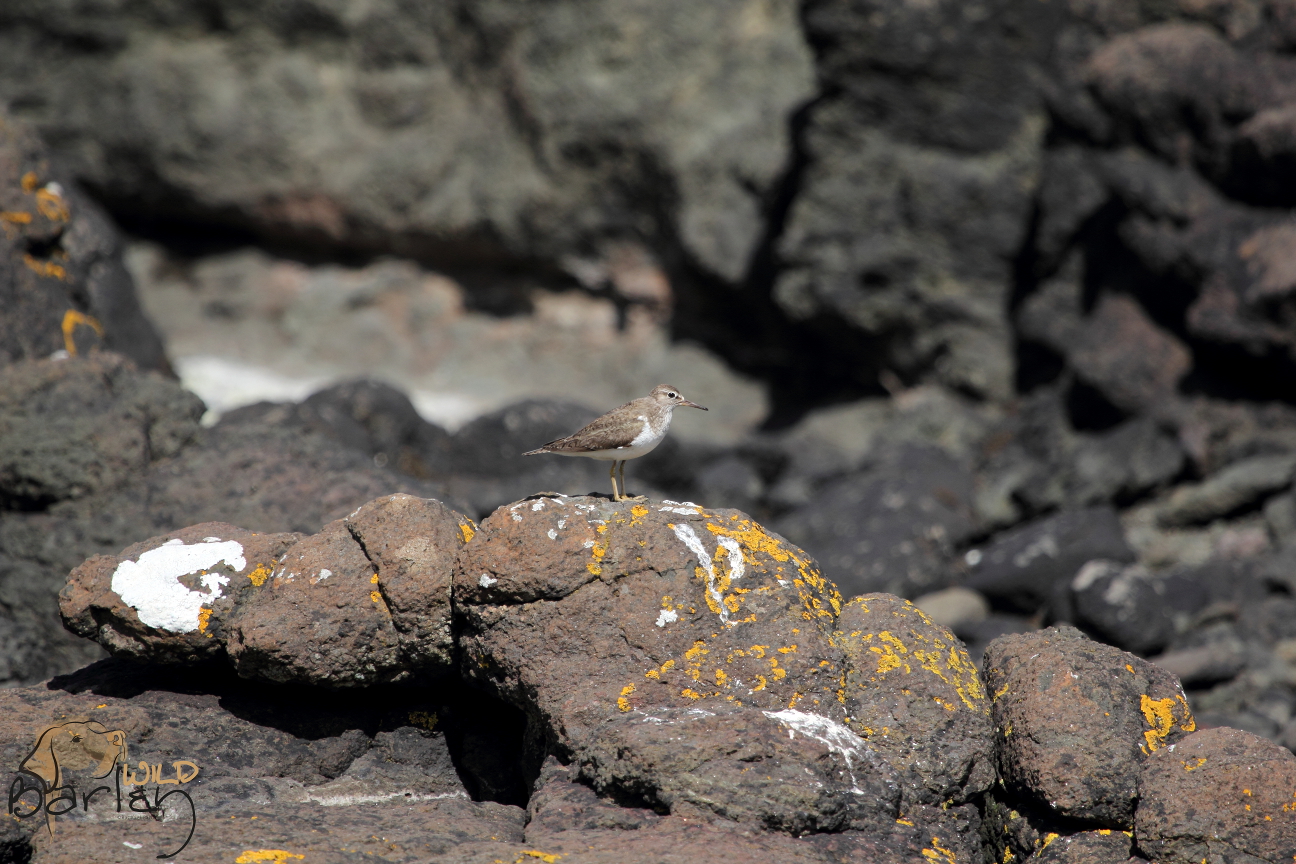
With a warm sun blazing in blue skies that stretched over the hills, mountains and lochs, we headed out along the single track roads, winding our way around the island. From the black rock, strewn with a patchwork of yellow and white lichen, and deep browns of seaweed along the shorelines of the lochs to the green glens between mountains we scanned shoreline, hillside and the skies for all manner of wildlife. Picking a spot alongside the rippling dark waters of a loch we would sit and watch. All around us came the song of tree pipit, willow warbler, skylark and swallow. Wheatears bombed from rock to rock, a flash of white against the greenish yellow grass and dark rock, before perching upright, its striking dark mask against steel blue feathers. On the shore, pairs of oystercatchers called to each other, then would head off pursuing a gull that ventured too close, giving it hell before settling back on the rock. Amongst patches of bright green grass, dotted with sea pink, that stood out in contrast to the black rock, came the call of common sandpiper. They seemed to be everywhere!

Common sandpuper

Out on the waters of the lochs red breasted merganser would sit bobbing the tiny waves. 

High above the dark greens and browns of the hillsides, from behind a ridge of dark rock mingled among the grass and heather, something large soared into the blue sky. Wings outstretched, ‘fingers’ splayed, wide and square like a barn door floating, there was no doubt what this bird is; a white-tailed eagle. The largest bird of prey in the UK, once extinct and now bouncing back thanks to conservation efforts and a reintroduction programme that started not far from Mull on the Isle of Rum. For an age we would sit and watch as it soared higher and higher becoming a mere speck in the endless blue. 

But it was not the only bird we see patrolling the thermals,  golden eagles too would appear from nowhere to soar across our vista. 

This time though it is different bird watching on Mull. I am different. I have more years of birding behind me, and I have developed skills in bird ringing and nest finding. More so we find ourselves watching an individual bird, or pair more intently than before; watching for those clues that ultimately give away the location of a nest. 

Amongst the black rocks, with their coating of white and yellow lichen, and the bright green grass with tufts of sea pink, we find oystercatcher, common sandpiper and common gull nests. We watch a wheatear head into a hole in the bank, knowing in its dark cool depths lies either a clutch of neat eggs or a bunch of hungry mouths.

An oystercatcher nest nestled along the shoreline of Mull

Once again it was fabulous to be back amongst the wildlife and wild landscape of one of my favourite places on Earth. The Isle of Mull. 

Sunday, 21 June 2015

Whale Watching Off Mull

I was back on the island where I had spent two summers working as a wildlife guide. Two extraordinary summers filled with fabulous people and wonderful wildlife, from whales and dolphins to eagles, seabirds and basking sharks. I had made firm friends that to be honest feel more like family. Now I was back, not permanently but for more than the fly by afternoon visit of my previous return. 

So after so many years I was once more sat on top of Sea Life Survey’s M.V. Sula Beag, the boat I had worked on in my second season, watching as we meandered out of Tobermory heading for the Sound of Mull and the waters beyond. I gazed at the familiar sights, the multi coloured shop fronts that any kiddie of a certain age would recognise as Balamory, the houses extending up behind them, intermingled with deep green trees, the yachts and sailing vessels moored up, the lifeboat station and the small Kilchoan ferry. We pass Calve Island that sits in front of Tobermory Bay and head out into the Sound of Mull, passing the small Rubha nan Gall lighthouse. More memories come flooding back as the Sound stretches in front of us, bordered by the island herself and the mainland of the Ardnamurchan peninsula. The guide’s give their talk, pointing out what species of wildlife we might encounter and where we are heading. It is all so familiar, and yet so different, for one thing I am listening rather than giving the talk.

Tobermory © Lee Barber

As we come down the Sound past Bloody Bay and to Ardmore Point everyone it seems are looking at the white-tailed eagles nesting in the pine trees, their pale heads and brown bodies striking against the deep green needles. It is then that I turn to scan the water and cry out with pounding heart ‘whale!’ A minke whale circles, working a small area of the Sound, searching for food as we sit and watch. The sound of its breath as it surfaces makes me shiver every time. Harbour porpoise join the foray, rolling at the surface like a small, black wheel. After a while we move on, heading out of the Sound into the patch of water between the Small Isles, Ardnamurchan lighthouse and the island of Coll. The water is smooth, silky and blue as the sun breaks through the patchy cloud. Hundreds of seabirds sit or skim the waters surface, Manx shearwaters, guillemots, puffins, razorbills, kittiwakes, gannets to name a few. Tiny storm-petrels dance over the extra smooth patches, their feet dappling the surface. An Arctic skua comes racing through chasing a kittiwake, trying to make it drop its catch of fish.

Minke Whale

On reaching the Cairns of Coll, a small cluster of rocky islands off the main island of Coll, we search the mixing waters where recent sightings of whale have been good. We are rewarded with sightings of another three minke whales, their dark backs gracefully breaking the now deep blue water, rolling and slipping beneath the gentle waves.  Once more we sit and watch as the whales again work in a circle, searching for food, occasionally coming in close to the boat before reappearing further away. After a while we turn and leave the whales to the foraging, heading back towards Mull accompanied by those multitudes of seabirds. 

I can’t keep away from the sea and the next day sees me back on the boat for another trip. It is another gorgeous day, with calm seas and sunshine greeting us once more as we steam out of Tobermory and up the Sound of Mull. This time it is the sharp eyes of Andy Tait, a long term volunteer with Sea Life Surveys who spots a whale, a little further out of the Sound. But the photos reveal it is highly likely to be the same individual we had encountered the day before with the distinctive nicks in the trailing edge of its dorsal fin giving it away. Again we simply sit and enjoy, listening and watching as the whale works its way in a circle around us, before once more heading across to the waters just off the Cairns of Coll.  In almost an exact repeat of the previous trip we spot more minke whales as we approach the mixing waters off the Cairns. But it some splashing a little further off that catches our eye and as we slowly make our way over it is soon revealed as the fast, deliberate movement of a group of common dolphins.

Common dolphin

We slowly move in their direction, and part of the group breaks away, speeding over, leaping synchronously together out of the blue water, sunshine glinting off the yellow patch on their sides. They approach us, bow riding and seeming to check us out as much as the other way round. But they are busy. The rest of the group remains aloof, intent on feeding and soon those that had come to investigate us return to that all important business too. But even to share a couple minutes of their time is magic, and as we head into the Cairns of Coll for lunch we watch them at a distance storming around, moving one way and then another, leaping high out of the waves and landing with huge splashes of white water. 


Lunch at the Cairns is another highlight that brings back a rush of memories. We anchor amongst the dark rocks, dappled with white and yellow lichen and covered with tufts of grass and the delicate flowers of seapink. The turquoise blue water gently rolls up onto white beaches made up of crushed shells. It is a truly beautiful and idyllic spot. Common and grey seals lounge on the black rocks, the braver ones approaching to bob at a respectable distance watching us, before almost spooking themselves and disappearing with a snort and a splash. All around Arctic and common terns patrol the water, passing back and forth, occasionally dropping down to catch a silvery fish. 

Although we wish we could, we cannot stay and soon it is time to leave. Slowly we make our way out from between the rocky islets to open water and then back across to Mull. We see more harbour porpoise as we return and even one more distant whale. 

It has been magic to return to these waters, and once again the marine wildlife of the Inner Hebrides has not disappointed. Thank you to all at Sea Life Surveys for giving me such a warm welcome back.

I promise myself I will not leave it so long next time… 

Find out more about whale watching from Mull with Sea Life Surveys on their website (www.sealifesurveys.com)

Sunday, 31 May 2015

What a Rail!

They are a bird that is actually fairly common in the watery habitats of Britain, but one that very few people tend to see. You may however have heard it on many occasions but not realised, wondering what is that harsh screech coming from the dense vegetation. Most are more familiar with their less secretive cousins, the coot and moorhen. While ringing and nesting in the reed beds at Cranwich we often hear this secretive and elusive bird but today’s trip would end with a rather special encounter as we caught one in one our traps. It is the water rail. 

A busy ringing session had seen us process just over 50 birds, numbers bumped up by young recently fledged robins with their speckled brown plumage and long tailed tits with their chocolatey brown faces and deep red eye ring. With the wind picking up and the nets down most of the team had drifted away, to spend their Saturday afternoon elsewhere either checking other sites for nests or even heading home for a nap (well we had all been up since 4 am!). It was the last check of the trap, one final chance to see if we had been successful. The water rail is not the easiest of species to catch, and only three have been ringed on site since we began monitoring years ago. It appears though that Lee seems to have cracked it, with two of those three birds having been ringed this year. It is likely that we only have two or three pairs on site so it’s not like there are huge numbers to go for. However with some careful monitoring of where calling birds have been heard, and with the discovery of a beautiful nest, we are building a picture of the territories on site. Lee suspected that there was another pair at the end of one of our net rides, and so the trap had been set. 

A beautiful water rail nest

Standing in the slightly muddy ride, surrounded by the tall reeds and willows I listen to the sounds of the reed bed. The now constant chatter of reed warblers, their nesting in full swing, the distinctive song of the male cuckoo joined by the bubbling call of females, the song of reed bunting, and the persistent high pitched twitter of those families of long tailed tit. At the end of the ride Lee emerges from the reeds, at first glance he appears to be empty handed, before revealing from behind his back the very bird I had been hoping for. It is a water rail! 

Back at the car, I process the bird with care. It is wriggly, threatening to give me the slip. It is so much smaller than expected. Compared with the coot and moorhen I have held and seen up close, it is tiny! And so much daintier. The classic flailing of legs, scratching out with clawed feet is typical of handling any rail though. It is the perfect opportunity to take a really good look at this bird, one that if you are lucky enough to see it is usually over in a flash. Its long curved bill is red, as is on close inspection its dark eye. The sides of its head, neck and its underparts are a steely, bluish grey, a deep chestnut brown streak runs from the top of its head right the way onto its back where the feathers have deep black centres. Its flanks are barred with white and black. It is a beautiful bird. 

A beautiful water rail

The assessment reveals that this bird is in fact already ringed. Far from being a disappointment this may be the most interesting fact. The bird was ringed at the other side of the pool where we caught it, only a month or so earlier. It seems the bird’s breeding territory may be larger than originally suspected and that the males (which is what we suspect this to be) move around more than we initially thought. It is a very interesting piece to the Cranwich water rail population puzzle.
. 
We return the bird to the edge of the reed bed where we caught it, where on letting it go it wastes no time in scampering away into the dense growth. Once more becoming just that elusive screech from among the reeds. 


Friday, 15 May 2015

10 years to the day

Where have the last 10 years gone? 

10 years ago today I was sat on a rather lovely boat called Alpha Beta, bobbing around off the coast of the Isle of Mull. Fresh out of university I was spending the summer working as a volunteer for Sea Life Surveys, one of the longest running whale watch companies in the UK. This particular day was my day off, but that had not stopped me hopping on board for a couple of whale watches, off in search mainly of minke whales but with a range of whale and dolphins species, seals, basking sharks and a multitude of seabirds to encounter. I remember this particular trip more than any other. It was a rather cloudy day but the sea was reasonably calm. We’d done one trip and had headed out for a second. Sitting on the top of Alpha Beta, her broad white bow in front of me, dipping and rising a little with the waves I had gazed out at the silvery grey sea and the surrounding landscape that was quickly becoming very familiar to me. The Isle of Mull stretched out to my left, to my right in the distance the low lying island of Coll hovered on the horizon. Ahead the rugged coastline of Ardnamurchan, with its impressive lighthouse towering into the grey clouds. Beyond that I could still see the characteristic outline of the Small Isles, in particular Rum and Eigg (which always reminded me of a humpback whale). We were heading in, having encountered a good number of birds, and a couple of minke whales, one of which had surfaced just in front of the boat so that I could almost see down its blowholes as it surfaced, breathed and dived. It had been a good trip. Eri, who was guiding had kept the passengers engaged, all I had to do was sit back and enjoy.

Ardnamurchan lighthouse with the Isle of Eigg in the background

It was just as we were approaching the entrance to the Sound of Mull that one of the passengers commented that he thought is saw something, way over towards the Small Isles. I looked over, scanned, and something caught my eye. Something that at first did not really register. A tall, black, vertical ‘thing’ had risen out of the grey waves before disappearing. I spoke with the skipper. There was… something there… So we turned and all eyes were trained on the spot. Once again that something surfaced, only this time there was no doubting what it was. Orca! We slowed and let them approach. Thus began my very first encounter with Orca. Not just in the UK but anywhere. Not only that but they were members of the West Coast Community, the only resident group of Orca in the UK, and with only nine members (possibly eight) and no calves in years, also the most endangered.

Aquarius

I watched spell bound as six whales approached, two with really tall dorsal fins. Most likely Aquarius and Comet, two of the males in the group, accompanied by females, likely to be Puffin and Occasus who usually travel with Comet and Aquarius respectively, although I cannot tell from my photos. Behind these came a very distinctive male called Floppy Fin, one of a very small percentage of wild Orca that have a bent over dorsal fin. Again a female travelled close to him, one I could not ID from my pictures but could have been Nicola, a female who is regularly seen with Floppy Fin and suspected to be his mother. In total there were six of them, moving at a steady pace, passing us and heading down the coast. I remember seeing Floppy Fin and the female tail slapping and milling around before also heading away.

Two of the group head down the coast of Mull

It was the best encounter of my first year with Sea Life Surveys, and probably of the second year I spent with them in 2008. I remember the smiles from passengers and crew, the elation that lasted for days and for me has never left. I am so chuffed that the very first Orca I ever saw were in Scottish waters

In the intervening years I have been lucky enough to see Orca again, and they have been very special encounters each of them; every sighting of wild Orca is. Standing on a cold, windy deck of a ferry crossing the Bay of Biscay, with a guy who just came up to have an early morning coffee and was treated to me jumping around the deck in excitement as four Orca passed quickly by. Watching a male and female through a telescope from a beach in New Zealand, not quite believing my partner at first when he said ‘I’ve got Orca!’ Two Orca filled weeks in Canada that began with watching transients hunting seals and culminated in a spectacular encounter in a kayak with Northern Residents appearing out of the mist. Three individuals cruising out of Force 8 waves north of Norway, and then a group of nine calmly surfacing in silky blue, calm waters on the journey south with one huge male breaching clear of the water parallel to the ship, much to the delight of all on deck.

Northern Resident Orca in Canada

All have been memorable and special, but I will always remember that very first sighting, 10 years ago today in a very special place with a crew of very special people. A part of my heart remains in Mull and with the West Coast Community of Orca, who inevitably will one day no longer patrol the waters of the west coast of Scotland and down through Irish waters. Perhaps before that time I will catch up with them again, and maybe even get the chance to meet John Coe, the most recognisable and well known of the community. But if not I am privileged and proud to have encountered them once all those years ago. 

Find out more about the West Coast Community of Orca at the Scottish Orca blog or the HWDT website. And why not go whale watching with Sea Life Surveys, one of the best whale watch companies not only in the UK but in the world!