Showing posts with label nesting. Show all posts

Monday, 11 April 2016

Lynford Water

It had been a pretty dismal day, raining on and off, not really inspiring a desire to go outside. By the afternoon things seemed to be improving, the rain had stopped and while clouds still hung in the sky it was brightening. The clouds no longer looked ominous blue grey but were brightening to a more silvery grey with a hint of sun beyond. Now we ventured out, heading into the Forest and to Lynford Water. Right next to the arboretum, Lynford Water for many years was used for gravel extraction, during which numerous flint artefacts including handaxes were discovered. Not only that but in 2002 the remains of at least nine woolly mammoths, a woolly rhino, a bear and reindeer along with Neanderthal flint tools were discovered!  What they had discovered was a site where Neanderthal people had butchered mammoths some 60,000 years ago! It is one of the most important Neanderthal sites ever found in Britain. When extraction ceased completely a few years ago the site was restored with the creation of a variety of habitats including dry acid grassland, floodplain grazing marsh, reedswamp mosaic and reedbeds. Not only that the site was opened to the public. To be totally honest it is not the prehistoric history of Lynford Water that now brings me to the site, although it is exciting to think of woolly mammoths and Neanderthal humans living here. These days with the habitat restored it is the bird life which brings me, and many others to Lynford Water.

Barley enjoying Lynford Water. Photo Lee Barber

Wandering down the path from the car park, the pine trees of the Forest open out to reveal a grassland bounded by patches of dark green pine, some recently felled areas which are a tangle of branches, scrub and gorse, and the lakes themselves with small sandy beaches running into the smooth, dark water. From a stand of birch comes the song of a recently returned willow warbler; our first Norfolk swallows dip low over the water; the sound of siskins comes from the tall dark pines surrounding the open grass. The distinctive song of a chiffchaff reveals a bird carrying nesting material, pieces of reddish brown dried leaves stick out from its tiny beak. A little time spent watching reveals the start of a nest being woven amongst the grass at the base of a small tree amongst low gorse bushes.

Chiffchaff 

We walk around the open grassland, its soil a little churned in places, small prickly plants of gorse and bramble, poking through the open soil and yellowy green grass. Yet more bird song, robins in trees, dunnock in the bracken and debris of the clearfell, and in the open grassy meadow… the call of woodlark. On a small thorny bush sits one of these beautiful, cryptically coloured birds. Once again a little time spent watching this bird and listening reveals a nest. The only reason we search for and approach the nest is because we have a Schedule 1 licence to do so. No one should approach a nest of this species without such a licence. Larks, as with many ground nesting species are notorious for leaving the nest at an early age, even before they can fly. An adaptation to help escape predators. These three were already starting to wander just outside of the nest cup itself, even though they had another week or so until they could fly.  A quick call brings a colleague with some kit and the chicks are not only ringed, but also colour ringed, adding to the project being carried out on this species in the Forest. The colour rings means that the birds will be uniquely identifiable in the field without having to recapture them. It is the first woodlark nest we have ever found on our own and not only that, based on the age of the chicks it is the earliest woodlark nest of the year in Breckland!

Three woodlark chicks. Photo Lee Barber


Sunday, 5 July 2015

Birding Mull

Being back on the Isle of Mull was not just about going whale watching, although given even half a chance I would have spent my whole time out on the water! But there were times believe or not during my two seasons working there where I was not out on the boats; likewise on my return this summer. So I did what I would usually do back then, head off in the car and search for the other amazing wildlife Mull has to offer, from otters to eagles. 

The stunning scenery of Mull

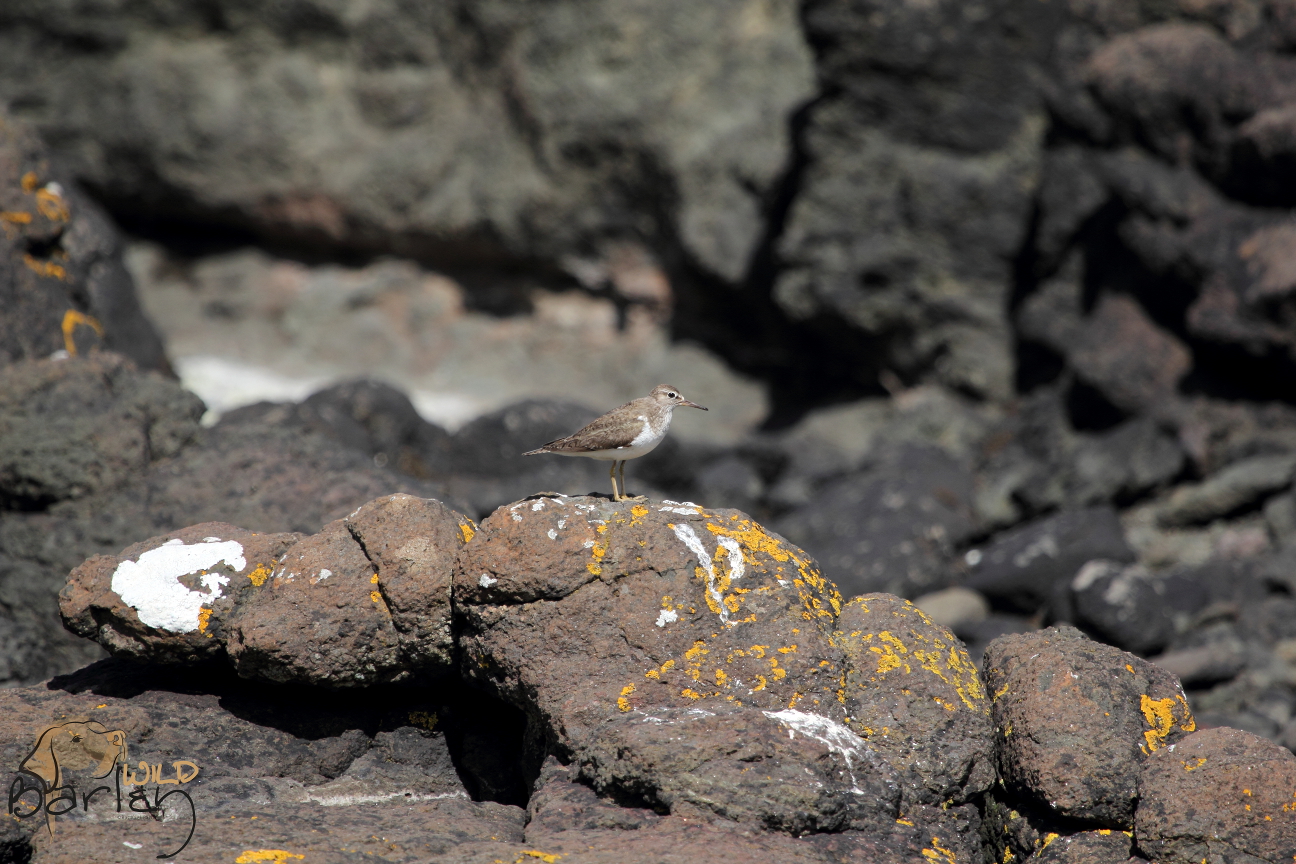
With a warm sun blazing in blue skies that stretched over the hills, mountains and lochs, we headed out along the single track roads, winding our way around the island. From the black rock, strewn with a patchwork of yellow and white lichen, and deep browns of seaweed along the shorelines of the lochs to the green glens between mountains we scanned shoreline, hillside and the skies for all manner of wildlife. Picking a spot alongside the rippling dark waters of a loch we would sit and watch. All around us came the song of tree pipit, willow warbler, skylark and swallow. Wheatears bombed from rock to rock, a flash of white against the greenish yellow grass and dark rock, before perching upright, its striking dark mask against steel blue feathers. On the shore, pairs of oystercatchers called to each other, then would head off pursuing a gull that ventured too close, giving it hell before settling back on the rock. Amongst patches of bright green grass, dotted with sea pink, that stood out in contrast to the black rock, came the call of common sandpiper. They seemed to be everywhere!

Common sandpuper

Out on the waters of the lochs red breasted merganser would sit bobbing the tiny waves. 

High above the dark greens and browns of the hillsides, from behind a ridge of dark rock mingled among the grass and heather, something large soared into the blue sky. Wings outstretched, ‘fingers’ splayed, wide and square like a barn door floating, there was no doubt what this bird is; a white-tailed eagle. The largest bird of prey in the UK, once extinct and now bouncing back thanks to conservation efforts and a reintroduction programme that started not far from Mull on the Isle of Rum. For an age we would sit and watch as it soared higher and higher becoming a mere speck in the endless blue. 

But it was not the only bird we see patrolling the thermals,  golden eagles too would appear from nowhere to soar across our vista. 

This time though it is different bird watching on Mull. I am different. I have more years of birding behind me, and I have developed skills in bird ringing and nest finding. More so we find ourselves watching an individual bird, or pair more intently than before; watching for those clues that ultimately give away the location of a nest. 

Amongst the black rocks, with their coating of white and yellow lichen, and the bright green grass with tufts of sea pink, we find oystercatcher, common sandpiper and common gull nests. We watch a wheatear head into a hole in the bank, knowing in its dark cool depths lies either a clutch of neat eggs or a bunch of hungry mouths.

An oystercatcher nest nestled along the shoreline of Mull

Once again it was fabulous to be back amongst the wildlife and wild landscape of one of my favourite places on Earth. The Isle of Mull. 

Sunday, 31 May 2015

What a Rail!

They are a bird that is actually fairly common in the watery habitats of Britain, but one that very few people tend to see. You may however have heard it on many occasions but not realised, wondering what is that harsh screech coming from the dense vegetation. Most are more familiar with their less secretive cousins, the coot and moorhen. While ringing and nesting in the reed beds at Cranwich we often hear this secretive and elusive bird but today’s trip would end with a rather special encounter as we caught one in one our traps. It is the water rail. 

A busy ringing session had seen us process just over 50 birds, numbers bumped up by young recently fledged robins with their speckled brown plumage and long tailed tits with their chocolatey brown faces and deep red eye ring. With the wind picking up and the nets down most of the team had drifted away, to spend their Saturday afternoon elsewhere either checking other sites for nests or even heading home for a nap (well we had all been up since 4 am!). It was the last check of the trap, one final chance to see if we had been successful. The water rail is not the easiest of species to catch, and only three have been ringed on site since we began monitoring years ago. It appears though that Lee seems to have cracked it, with two of those three birds having been ringed this year. It is likely that we only have two or three pairs on site so it’s not like there are huge numbers to go for. However with some careful monitoring of where calling birds have been heard, and with the discovery of a beautiful nest, we are building a picture of the territories on site. Lee suspected that there was another pair at the end of one of our net rides, and so the trap had been set. 

A beautiful water rail nest

Standing in the slightly muddy ride, surrounded by the tall reeds and willows I listen to the sounds of the reed bed. The now constant chatter of reed warblers, their nesting in full swing, the distinctive song of the male cuckoo joined by the bubbling call of females, the song of reed bunting, and the persistent high pitched twitter of those families of long tailed tit. At the end of the ride Lee emerges from the reeds, at first glance he appears to be empty handed, before revealing from behind his back the very bird I had been hoping for. It is a water rail! 

Back at the car, I process the bird with care. It is wriggly, threatening to give me the slip. It is so much smaller than expected. Compared with the coot and moorhen I have held and seen up close, it is tiny! And so much daintier. The classic flailing of legs, scratching out with clawed feet is typical of handling any rail though. It is the perfect opportunity to take a really good look at this bird, one that if you are lucky enough to see it is usually over in a flash. Its long curved bill is red, as is on close inspection its dark eye. The sides of its head, neck and its underparts are a steely, bluish grey, a deep chestnut brown streak runs from the top of its head right the way onto its back where the feathers have deep black centres. Its flanks are barred with white and black. It is a beautiful bird. 

A beautiful water rail

The assessment reveals that this bird is in fact already ringed. Far from being a disappointment this may be the most interesting fact. The bird was ringed at the other side of the pool where we caught it, only a month or so earlier. It seems the bird’s breeding territory may be larger than originally suspected and that the males (which is what we suspect this to be) move around more than we initially thought. It is a very interesting piece to the Cranwich water rail population puzzle.
. 
We return the bird to the edge of the reed bed where we caught it, where on letting it go it wastes no time in scampering away into the dense growth. Once more becoming just that elusive screech from among the reeds. 


Wednesday, 13 August 2014

A Start at the end of the season...the 100th Wild Barley Post!

An industrial yard. A concrete square surrounded on all sides by tall brick warehouses. Scattered through the yard are stacks of wooden pallets, plastic drums and other working debris. Beyond tall gates is a labyrinth of roads that make up the network of industrial units sandwiched between river and sea in Great Yarmouth. A small lab leads through bolted wooden doors onto this yard. Above that is another set of offices accessed by a set of metal stairs. It is not the most obvious place you would go looking for nests, yet we know many species of birds will happily nest alongside human activity in urban areas. Most of the time you might think of pigeons, or blackbirds in your gardens, all associated with some sort of greenery. But there are some birds that will nest in the most seemingly unnatural areas. Think of peregrine falcons nesting on cathedrals and gas works, perhaps not so glamorous but gulls nesting on roof tops. Here in this yard there was also a nest. 

An unlikely place for a nest...

Tucked up under the eaves of the metal stairs, sitting on a small ledge is a rather scruffy collection of dried grass and leaves. It’s not totally inconspicuous with bits of yellowing grass hang down from this ledge. The soft tsip-tsip call of a bird from the yard gives the identity of the nest away. Hopping from roof top to pallets and back again is a small robin-sized bird. Its vent and tail are a beautiful pale red with the rest of its body charcoal grey and black. He holds himself up right, cocky almost, calling to another similar bird who has that beautiful red tail but is more drab greyish brown above. The female. The pair are Black Redstarts, and we are privileged to have them breeding in our yard. There are fewer than 100 breeding pairs in the UK and because of this the nests have extra protection through licencing to prevent disturbance.

As a licenced bird ringer, with an open nesting pullus endorsement and having an appropriate schedule 1 licence I carefully and quietly approach the stairs, hoisting myself up on a bike rail to peer into the nest. Despite the bright sunshine and heat of the yard, the nest is dark and cool. A small neat cup sits amongst the seemingly untidy mess of grass, and within this five pink, blind and pretty much bald little chicks squirm. I leave them be, letting the parents return to tend their brood.

The first glimpse of Black Redstart chicks

When I return the chicks have grown. They have tracks of feathers down their bodies, tufts of fuzzy feathers form patches over the head and body, while tiny little pins are starting to poke through on stubby wings where feathers will grow. Their legs are well developed and are ready to take a ring. The process is quick and in a matter of moments the chicks are nestled back in the cup, waiting for mum and dad to return which is not too long.

Ringed and returned to the nest

A short while later and a careful peek into the nest reveals large, well feathered chicks. I do not hang around long. These guys have grown so much, they are open eyed and alert. I am as quiet as possible, moving slowly so I do not startle them. Their parents still tsip-tsip at me from the roofs as I retreat.

My final visit and the yard is quiet, I climb slowly up to the nest, already knowing the answer. The nest is empty, the dark corner quiet, the cup well flattened. The chicks have gone. Headed off into the big wide world, five extra souls to the UK’s Black Redstart population.